Amplifying Pacific Youth Voices in Diplomacy: PCF at the Aotearoa Youth Declaration 2026
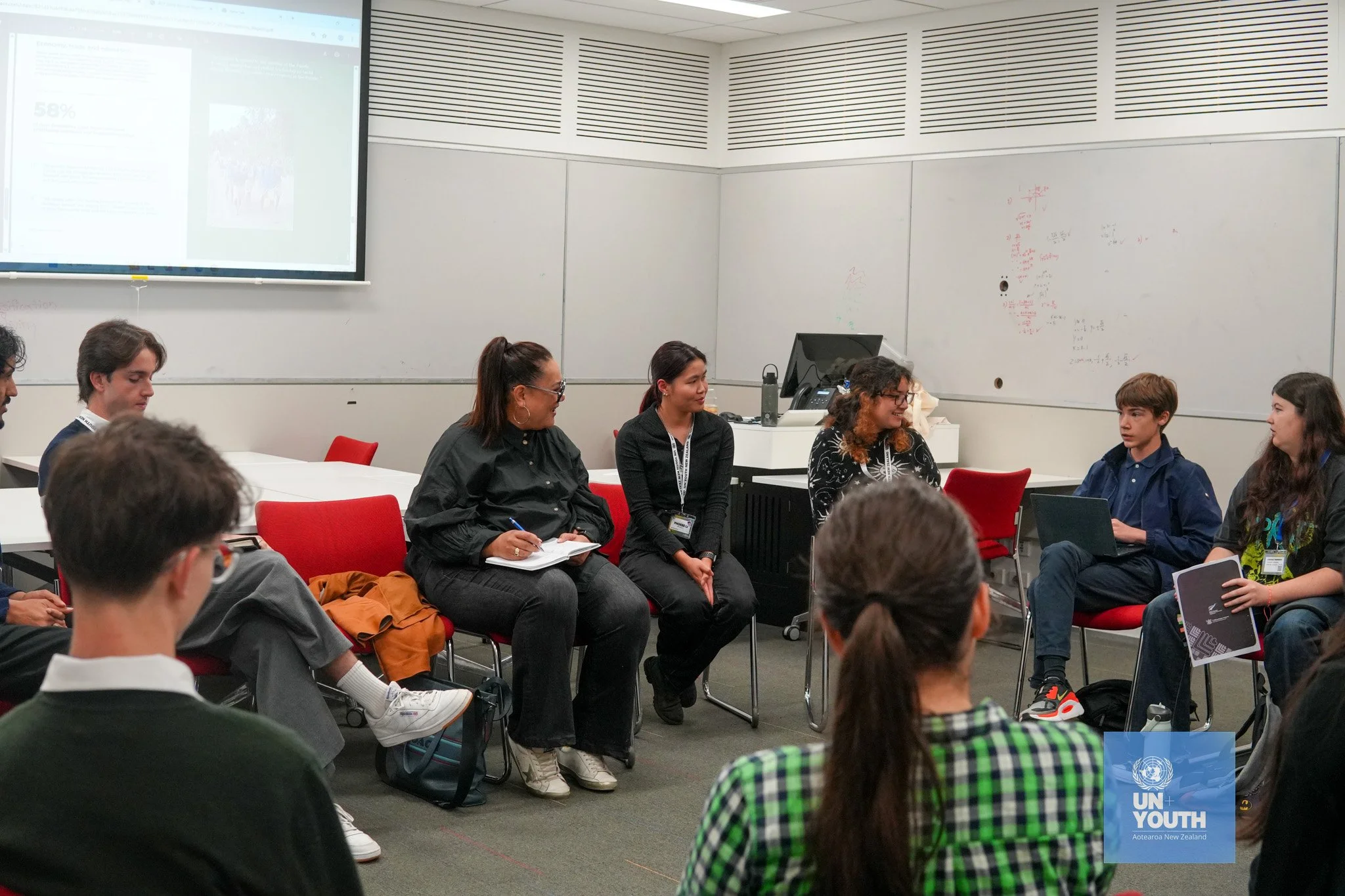
Image courtesy of UNYouth
By Joanna Bourke, CEO, Pacific Cooperation Foundation
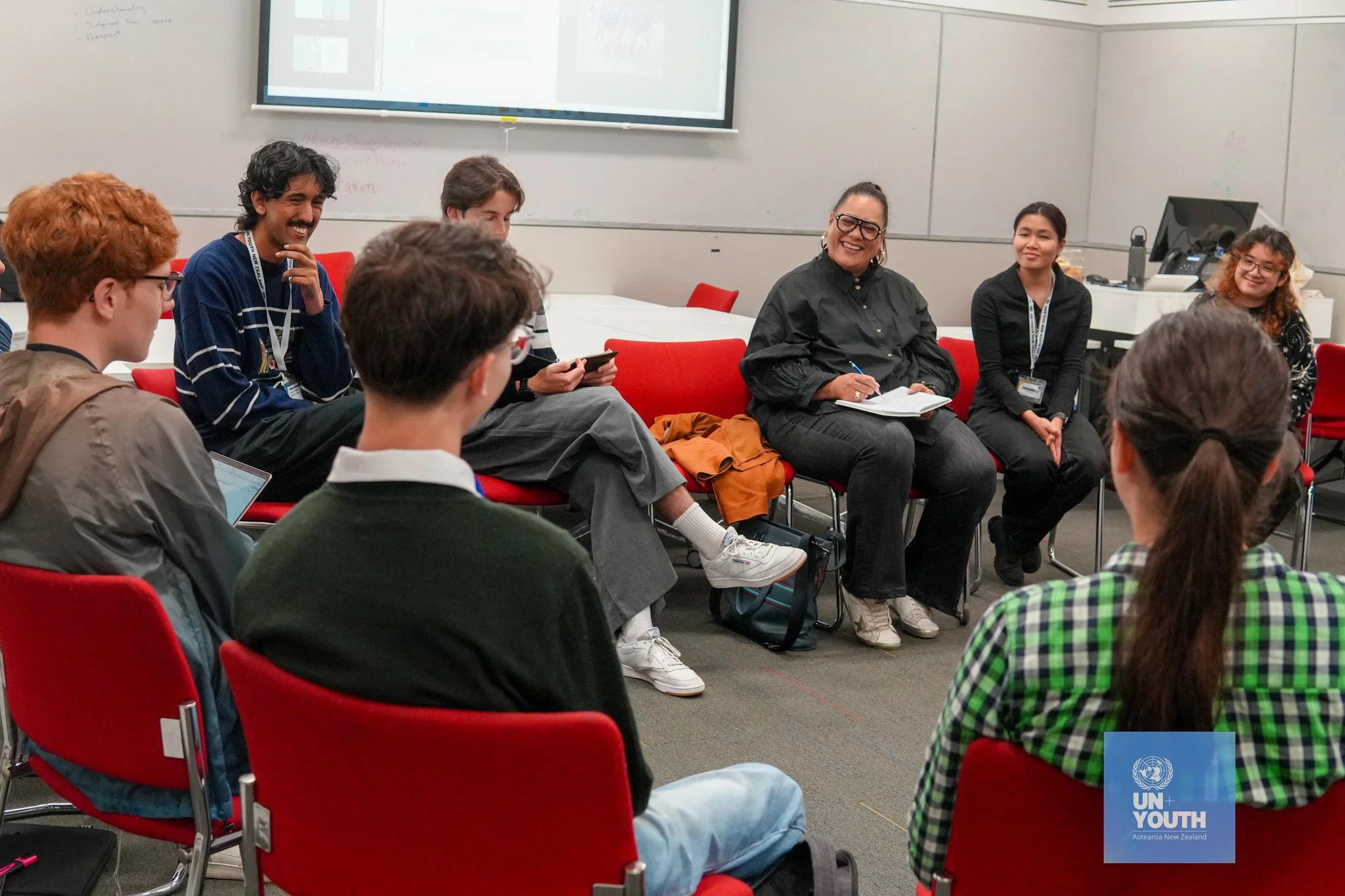
On Friday, 10 April, I had the privilege of representing the Pacific Cooperation Foundation at the Aotearoa Youth Declaration (AYD) 2026 at the University of Auckland. AYD is one of Aotearoa’s most powerful youth civic engagement platforms — a space where our bright young minds gather to question, challenge, imagine, and shape the world they are inheriting.
I was invited to join the Diplomacy and Economic Development rōpū, and as it turned out, I was the only speaker in the room. But what unfolded was a talanoa in its truest form — a circle of bright young sparks, ready to engage with the world, unafraid to ask the hard questions, and deeply grounded in who they are and where they come from.
The room itself was a beautiful reflection of Aotearoa today: young people with whakapapa and heritage from Vietnam, the Philippines, Fiji, India, Christchurch, Mosgiel — a tapestry of identities, experiences, and perspectives. Before we began, I gently reminded them that they were sitting in a Pacific Island nation. That grounding shifted the energy immediately. It reframed the talanoa, anchoring it in place, in context, and in the responsibility we all share to understand the region we are part of.
In that moment, I was reminded — powerfully — why PCF exists.
Why our Vision of a confident, connected, and thriving Pacific region matters.
Why our Mission to strengthen Pacific capability, amplify Pacific voices, and support Pacific-led futures is not just organisational language, but a living commitment.
And why PCF was exactly where it needed to be that day: sitting alongside ‘Youth’ enabling their voices, and ensuring they have the knowledge and confidence to navigate the complexities of our region.
Why PCF Chose to Stand With AYD 2026
Standing in that room — surrounded by bold, brilliant, culturally anchored young people — reaffirmed the values that guide PCF’s work. Our commitment is clear:
• Pacific-led and Pacific-centred
• Youth-focused and capability-building
• Aligned with regionally endorsed frameworks
• Committed to strengthening Pacific agency and voice
AYD invited us into a space where these values could be lived, not just spoken. It offered a platform where rangatahi could stretch their thinking, test their ideas, and engage with the complexity of the region they are inheriting. It was a space that honoured identity, encouraged curiosity, and allowed young people to speak with the kind of freedom and confidence that only comes when they feel seen.
Our region’s future depends on young people who understand the Pacific’s complexity — its geopolitics, its histories, its values, its vulnerabilities, and its immense strengths. Supporting AYD is one way PCF can help ensure they have access to the knowledge, networks, and confidence they need to lead with integrity and courage.
UN Youth Aotearoa created a space where Pacific, Māori, migrant, queer, disabled, and neurodiverse youth could engage meaningfully with global issues. It was an honour for PCF to stand alongside them — not as observers, but as partners committed to uplifting the next generation of Pacific thinkers, doers, and leaders.
A Talanoa on Geopolitics, Values, and Responsibility
The rōpū came ready — bold, curious, and unafraid to interrogate the forces shaping our region. Together, we explored:
The shifting currents of the Pacific
• The influence of major powers, including the USA, China, Australia, and AUKUS partners
• The strategic role of the Pacific Islands Forum as the region’s collective political voice
• The importance of aligning with the region’s own guiding frameworks:
o The 2050 Strategy for the Blue Pacific Continent, the long-term blueprint endorsed by Pacific Islands Forum Leaders
o The BOE Declaration on Regional Security, the region’s primary security framework, expands security to include human, environmental, cyber, and traditional dimensions
These are not abstract documents — they are the Pacific’s own articulation of its priorities, values, and aspirations. Any organisation working in the region, including PCF, must align with these frameworks to strengthen, not fragment, Pacific unity.
Understanding the deeper patterns — history as a teacher
As our talanoa deepened, we turned to the histories that shape Pacific attitudes toward power, sovereignty, and resource control. One of the young people asked why stories like Banaba/Ocean Island — where phosphate extraction devastated land, displaced communities, and left intergenerational scars — are not widely known among young New Zealanders. It was an important question, and one that speaks to the gaps in our collective understanding of the region we live in.
I shared that these histories are not about blame; they are about awareness. They help us recognise the patterns of resource misappropriation that have shaped the Pacific’s past — and that continue to influence global dynamics today. When we look at conflicts unfolding around the world, including those in places like Ukraine or Iran, many analysts point to the role that control over land, minerals, energy, and strategic corridors can play in escalating tensions. These examples remind us that the Pacific is not isolated from global forces; we are part of a wider system where power, resources, and influence intersect.
For our audience, understanding Banaba is not simply learning about a historical event — it is learning how to read the world. It is learning how to recognise the forces at play, how to question narratives, and how to protect the sovereignty and well-being of Pacific communities in the face of shifting geopolitical winds. And it is learning that their voices, their vigilance, and their leadership matter.
Labour mobility and economic realities
From there, our conversation moved naturally into the complexities of labour mobility — RSE schemes, remittances, labour shortages in Pacific economies, and the social and economic impacts of mobility. Their questions showed a maturity and clarity that left me hopeful for the region’s future.
Honouring the diversity of Pacific identity
I reminded them that Pacific diaspora youth in Aotearoa are a distinct cohort — with their own experiences, pressures, and opportunities. Their voices matter, and they must not be treated as interchangeable with their kin in the Islands. Both perspectives enrich our regional story.
“Getting Down on the Mat” — A Pacific Model of Leadership
One of the strongest messages I shared was the importance of ‘getting down on the mat.’
In the Pacific, leadership is relational.
It is grounded in humility, respect, and the vā — the sacred space between us.
It requires us to sit with people, listen deeply, and understand context before acting.
This is the Pacific way of diplomacy.
This is the Pacific way of leadership.
And this is the approach PCF is committed to modelling.
Youth Voice Is Not a Courtesy — It Is a Strategic Imperative
I reminded the rōpū that they are not “future leaders” — they are leaders now.
Their lived experience is valid political insight.
Their questions shape the region’s trajectory.
Their diversity strengthens our collective vision.
For PCF, youth voice is not an add-on. It is central to the work we do and the direction we are shaping.
A Partnership That Strengthens the Sector
I want to extend my sincere thanks to UN Youth Aotearoa for inviting PCF into this space and recognising the Foundation as a credible, trusted partner in amplifying Pacific voices.
Your commitment to empowering youth— especially those from Pacific and marginalised communities — is shaping the leadership landscape of Aotearoa. PCF is proud to walk alongside you.
Our involvement in AYD signals PCF’s commitment to:
• building Pacific capability
• strengthening youth pathways
• deepening regional understanding
• supporting Pacific-led frameworks
• investing in the next generation of leaders
This is the kind of partnership that elevates the entire sector.
Looking Ahead
The Pacific is no stranger to change — as Small Island Developing States, we often bear the brunt of global shifts long before the rest of the world feels their impact, and the effects linger in our homes, our oceans, and our communities. Yet the bright young sparks I encountered at AYD 2026 — bold in their thinking, bolshy in the best way, brave in their convictions, and beautifully grounded in culture — made it clear that they will meet these global challenges with a sovereign confidence, a strength of purpose, and a sincerity that gives me immense hope for our region.
I am committed to championing the spaces, platforms, and pathways that allow our bright sparks to speak freely — to lend their voices, experiences, and connections without boundaries, and to shape the conversations that will define our shared future. Their voices must be heard in the rooms where decisions are made — in Aotearoa, across the region, and on the global stage.
The future will bring its own trade winds and tempests, but I have no doubt that the youthful minds we saw in that room — courageous, curious, culturally anchored — will weather the storms and navigate a course that is sustainable, peaceful, and distinctly Pacific. It was energising to wit, weave, and wonder alongside you — your courage and curiosity left me inspired for the Pacific we are building together.